[EMBEDDED HW]
Hardware
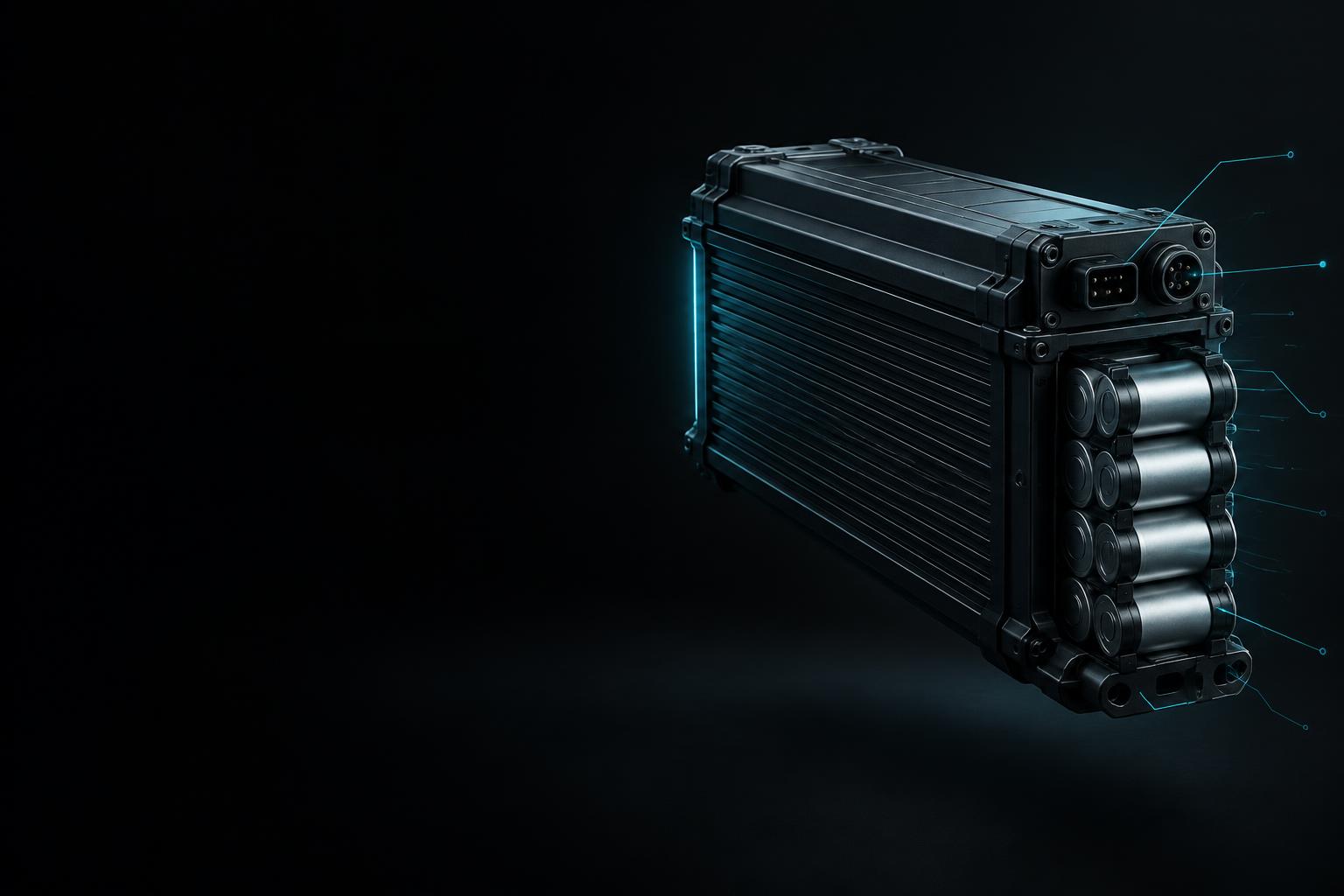
Compact battery monitoring and interface hardware, with a relay module for switching, interfacing or electrical isolation according to the final circuit design.
TESSERACKT is building an AI-powered battery intelligence platform for electric 2-wheelers and 3-wheelers.
Charge percentage tells you what’s available now. It doesn’t tell you how your battery is doing over time.
EV users can see charge and range, but often lack a clear, actionable view of long-term condition, degradation trends, remaining useful life and what to do next.
How much charge?
AVAILABLE RESERVEHow healthy?
CAPACITY RETENTIONBattery health requires appropriate data, reference measurements and validation—not a single voltage reading.
A connected intelligence layer that makes complex battery behavior understandable.
Collect available battery and vehicle data.
AI/ML models analyze battery behavior.
Estimate SoC, SoH, RUL and degradation trends.
Turn insights into understandable actions.
We don't just show battery data.
We turn battery data into actionable intelligence.
Hardware, intelligence and an application layer. Designed to work with the battery ecosystem—not replace the BMS.
Compact battery monitoring and interface hardware, with a relay module for switching, interfacing or electrical isolation according to the final circuit design.
SoC, SoH, RUL, degradation and anomaly analytics, developed and validated against appropriate reference data.
Battery health, trends, alerts and recommendations—delivered through a mobile or fleet dashboard.
Available data depends on the vehicle, battery pack, BMS architecture and communication interface. The relay is a switching/interface/isolation element, not an analog signal buffer.
Almost 800,000 electric
3-wheelers sold in 2025
Year-on-year growth in
electric 3W sales in 2025
Of India’s 3W sales were
electric in 2025
Electric 2-wheelers
sold in India in 2025
India remained the world’s largest electric 3W market. Commercial 3-wheelers are a major initial opportunity: battery condition can directly affect operating economics.
High utilization. Frequent charging. Repeated cycling. For 2W and 3W users, battery-dependent uptime makes understandable battery intelligence especially relevant.
India · 2025 sales data · Rounded figures as reported by the IEA.
Our focus is turning battery data into understandable predictions and actionable decisions.
Battery analytics, diagnostics, warranty and field insights.
Predictive maintenance, uptime and battery replacement planning.
Battery diagnostics and informed service recommendations.
Understandable battery health, alerts and recommendations.
Potential business model direction: B2B + B2B2C. These are intended customer segments, not a claim of current customers or revenue.
Modern BMS systems already perform monitoring, protection, balancing and estimation. This simplified comparison illustrates our decision-support focus, not a limitation of modern BMS capabilities.
Building the foundations. Prioritizing evidence.
Current priority: real-world validation with 2W and 3W battery data.
A structured path from collected data to field-tested insights.
Collect available battery and vehicle data from 2W and 3W platforms.
Validate SoC/SoH, degradation indicators, anomaly detection and recommendation logic against appropriate reference measurements.
Field validation with selected 2W users, 3W commercial users, fleets and service partners.
A staged research roadmap. The long-term BMS chip is a vision, not an existing product.
External monitoring, analytics and understandable recommendations.
Explore bringing validated intelligence closer to the battery.
Research toward integrated monitoring, protection and embedded estimation.
Cell-voltage and temperature measurement · Current measurement interface · Battery monitoring · Cell balancing · Protection logic · Embedded estimation algorithms · Communications · Diagnostics
SoC means State of Charge. System-on-Chip refers to integrated semiconductor hardware; these are distinct concepts.
Product, battery science, electronics and connected software.
TESSERACKT is supported through the V-NEST startup ecosystem at VIT Chennai.
TESSERACKT is building the intelligence layer that connects battery data, AI and actionable decisions.